

Introduction
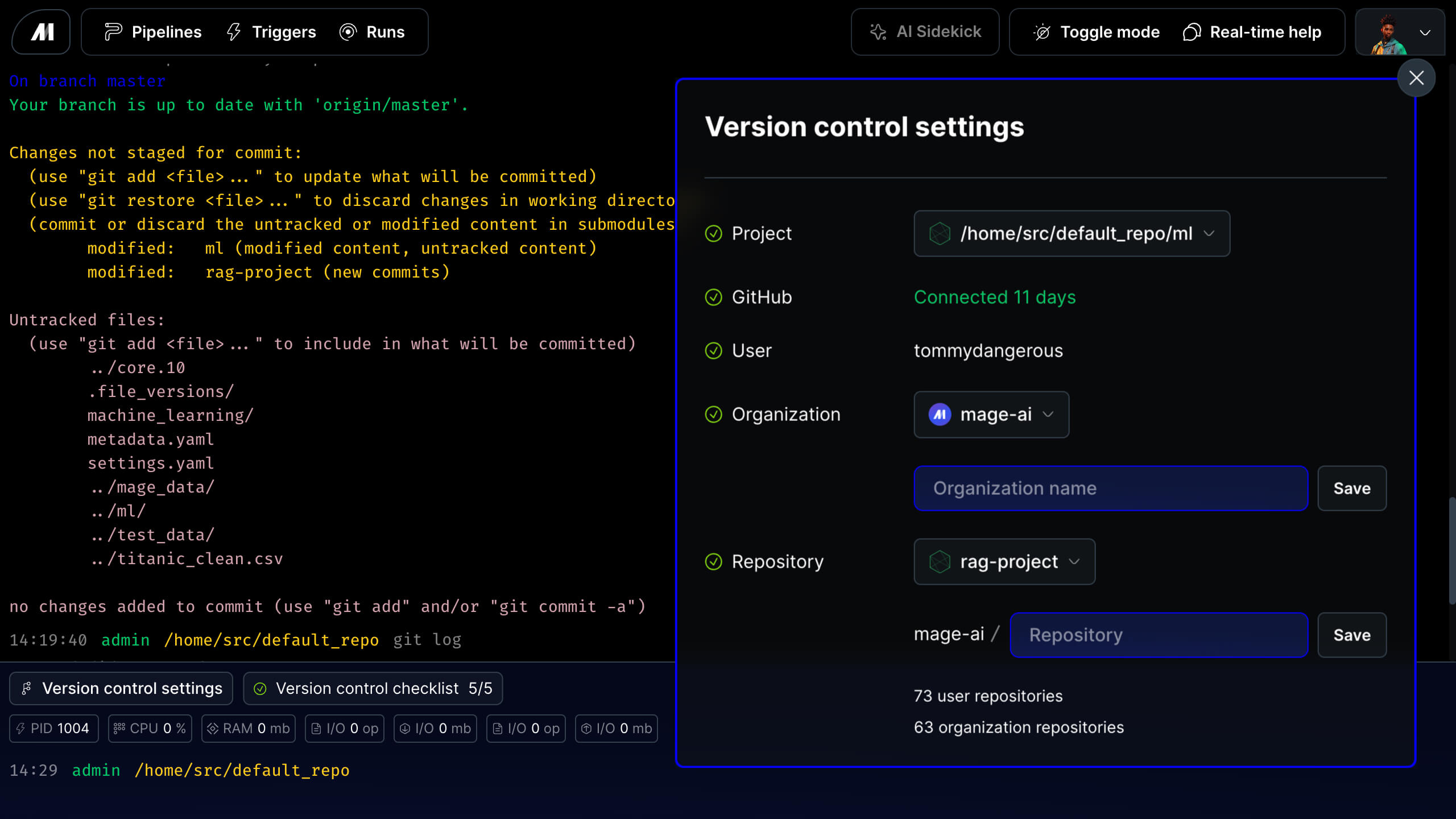
The Git Terminal is a browser based terminal with built in Git authentication, directly integrated into Mage Pro. It provides standard Git functionality with real-time collaboration features, eliminating the need to switch between tools for version control operations. Multiple team members can work simultaneously in the same terminal session, sharing commands and coordinating development work.Location
From the home page, hover over the left popout navigation menu and click Terminal. You will then be taken to a terminal screen directly integrated with Git.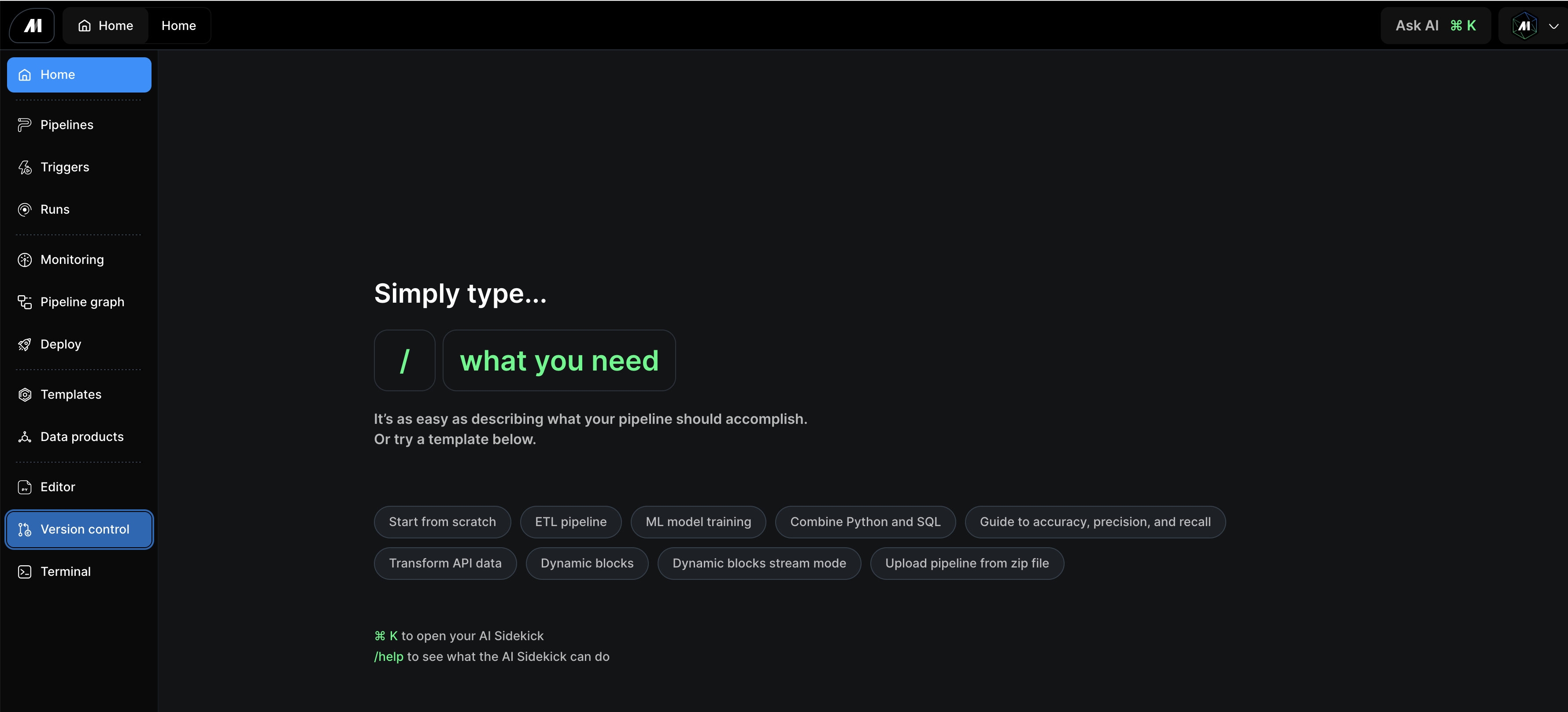
Integration
The Git Terminal connects with your existing development workflow. Key integration points include:- GitHub, GitLab, and other Git providers
- Maintains authentication across sessions
- Works within existing Mage Pro workflow
Use Cases
Use the Git Terminal in your development environment to push changes to GitHub for source version control after making modifications to pipelines, blocks, or configurations in the Mage UI. Essential use cases include:- Before deploying changes to save work to version control
- For regular commits to maintain code history and backup
Authentication
Before using the Git Terminal, authenticate with your Git provider through the Deploy App. This one-time setup enables Git operations within Mage Pro. Quick Setup:- Navigate to Deployments → Connect repository
- Complete OAuth authentication for GitHub, Bitbucket, GitLab, or Azure DevOps
- Configure your repository connection
git fetch, git pull, and git push can use the OAuth token already connected in Mage, and provider CLI commands can read the matching session token environment variable without running a separate CLI login such as gh auth login.
If the terminal header shows Authenticate Git, Mage has not detected usable Git authentication for the repository, either from the terminal environment such as an environment token, GitHub CLI login, or SSH key, or from a connected Git OAuth token. Select Authenticate Git to open the repository connection page for the current project, complete the Deployments Git OAuth flow, and then return to the terminal. If you authenticate Git directly in the terminal, Mage hides the action after it detects that Git authentication is available.
The Mage Pro image includes GitHub CLI (gh) for optional GitHub authentication
and status checks. For GitLab, Azure DevOps, and Bitbucket, use standard Git
commands with Mage’s credential helper or configured SSH/PAT authentication;
provider-specific CLIs are not required.
Usage
The Git Terminal supports all standard Git operations you’re familiar with. Run standard Git commands such as:Terminal controls
Use terminal tabs when you need more than one shell context. Each tab runs its own terminal session, keeps its own working directory, and can be reconnected or closed without interrupting the other tabs. The prompt bar shows the current folder, Git branch, and working tree change counts for the active tab. Autocomplete appears while typing and can suggest shell commands, Git subcommands, files, folders, executable commands onPATH,
and recent command history.
Terminal prompt timestamps and shell commands use UTC by default. If your
workspace has Display local timezone enabled, new terminal sessions use your
browser’s local IANA timezone for the prompt timestamp and the session TZ
environment variable.
Terminal sessions load Mage-managed safeguards for AI and Mage API access. Direct
shell calls from the browser terminal to Mage REST endpoints such as pipelines,
pipeline runs, blocks, block runs, pipeline schedules, and status are blocked;
use the Mage UI, the documented API from outside the workspace terminal, or Mage
agent MCP tools for those operations.